Overview
Philanthropic giving offers donors an opportunity to make a lasting impact while also achieving personal financial goals. A well-designed charitable giving strategy requires thoughtful planning, coordination, and an understanding of available structures, vehicles, and timing. When executed effectively, charitable strategies can maximize benefits to causes you care about, minimize taxes, and align with estate planning objectives. This whitepaper outlines several common funding methods and charitable vehicles to consider when planning your philanthropic efforts.
Methods of Funding
Cash
Cash is the most straightforward and frequently donated asset. Contributions made in cash are tax deductible up to 60% of a donor’s adjusted gross income (AGI), with any excess carried forward for up to five years. For many, this is a simple and effective way to support charitable causes while benefiting from a tax deduction.
Appreciated Securities
Gifting long-term appreciated securities—such as stocks, mutual funds, or ETFs—can provide additional tax advantages. Donors may deduct the full fair market value (FMV) of the securities (up to 30% of AGI), and the capital gain associated with the security is not taxed when liquidated by the charity, effectively meaning the capital gain tax is avoided. Additionally, excess contributions can be carried forward for five years. This method is particularly effective for those holding concentrated positions in specific low-basis securities within taxable accounts.
Qualified Charitable Distributions
Qualified Charitable Distributions (QCDs) provide a tax-efficient way for individuals aged 70½ or older to contribute directly from their pre-tax IRA to a qualified charity. Donors may contribute up to the IRS annual limit, and the amount donated is excluded from taxable income—making this an ideal strategy for individuals who do not itemize deductions or wish to reduce/avoid their taxable income. For donors subject to Required Minimum Distributions (RMDs), QCDs can help satisfy all or part of the RMD.
Charitable Giving Vehicles
Direct Giving
Direct giving is the most common approach to philanthropy, involving direct contributions to qualified charitable organizations. Donors should retain documentation and receipts for all gifts, as these are necessary to claim itemized deductions. Direct giving is ideal for one-time gifts or for donors who prefer simplicity and immediacy.
Donor-Advised Fund
Donor-Advised Funds (DAF) offer flexibility, tax efficiency, and investment growth potential. Contributions to a DAF are irrevocable and eligible for an immediate tax deduction (subject to AGI limits) based on the fair market value of the donation. Once contributed, funds can be invested and granted over time to charitable organizations of a donor’s choosing.
DAFs also support strategic giving through "bunching," where several years’ worth of charitable contributions are made in a single tax year to maximize itemized deductions. Donors can involve family members in grantmaking decisions and even establish a succession plan, making this an appealing multigenerational giving vehicle.
Family Foundation
Foundations provide a way to build a long-term philanthropic legacy and involve multiple generations in giving decisions. While they require more complex setup and administration, foundations provide families with substantial control over investment decisions, grantmaking, and long-term philanthropic strategy. For many families, this structure offers a way to formalize charitable giving and create a charitable legacy that reflects and reinforces shared family values.
While contributions to a private foundation are tax-deductible (subject to AGI limits), and its earnings are tax-exempt, foundations must distribute at least 5% of assets annually. They also involve regulatory oversight and require ongoing administrative and legal support.
Charitable Trusts
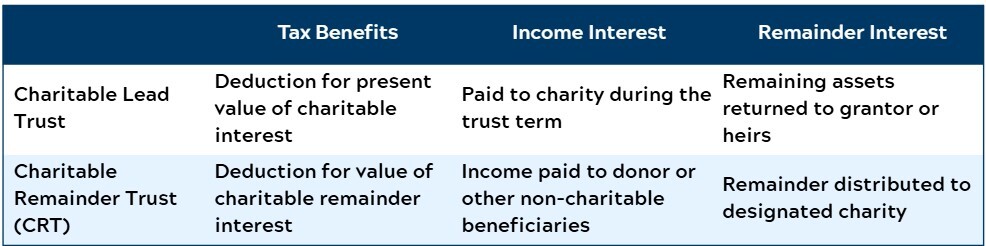
Charitable trusts are sophisticated planning tools that allow for the division of financial benefits between donors and charitable organizations. Importantly, these trusts can be structured to meet complex planning goals, including reducing estate tax exposure, providing lifetime income, and supporting one or more charitable beneficiaries. The two primary types are:
Conclusion
Effective charitable giving begins with intentional planning. When philanthropic goals are thoughtfully integrated into a comprehensive financial strategy, it is possible to achieve meaningful impact for charitable organizations while also maximizing tax efficiency and supporting broader estate planning objectives. Selecting the appropriate combination of funding methods and giving vehicles allows for both flexibility and long-term effectiveness. Whether through direct gifts, donor advised funds, private foundations, or charitable trusts, a well-structured approach can preserve family legacy, reflect core values, and enhance financial outcomes. Collaborating with a qualified advisor ensures that charitable efforts are aligned with the donor’s financial priorities and implemented in a strategic, sustainable manner.